How Many Carbohydrates Are in a Beer?
How many carbohydrates are in a beer? Most beers contain between 10 and 15 grams of carbohydrates per 12-ounce serving. Light beers can have as little as 3–6 grams, while higher-ABV styles like IPAs or stouts may range from 15–25 grams or more, depending on how they’re brewed.
But the carb count isn’t one-size-fits-all. It varies by style, alcohol content, and the brewing process itself. At a craft brewery, recipe decisions (from grain bill to fermentation time) play a big role in how many sugars are converted and how many remain.
So no, it’s not as simple as saying all beer is high carb. Different styles land in different ranges, and we’re going to break it down in a trail map style so you can see exactly what’s in your glass.
Key Takeaways
- Light lagers tend to be lower, while higher-ABV or malt-forward styles may contain more.
- The fermentation process determines how much sugar is converted into alcohol and how much remains.
- ABV, final gravity, and recipe design all influence carb content, so not all beers fit the same profile.
Where Do Carbs in Beer Actually Come From?
When people ask how many carbs are in beer, they’re really asking about the brewing process. Carbohydrates don’t get added in at the end. They begin with the grains.
Malted barley or wheat contains natural sugars. During the fermentation process, yeast consumes those sugars and converts them into alcohol and carbon dioxide. That conversion is what turns sweet liquid into alcoholic beverages like regular beer, non-alcoholic beers, and even spirits at their earliest stage.
But not all sugars ferment. Some remain behind in the finished beer. Those leftover sugars are the carbohydrates that show up in the carb count and carbohydrate content of your pint.
Several factors affect how many carbs remain, such as grain choice, alcohol content (ABV), yeast strain, and recipe design. That’s why carb content can vary depending on style, from light beers to popular beers with higher calorie content.
Think of it like fuel for the trail. Grains provide energy. Yeast burns some of it into alcohol. What’s left is part of what your body processes when drinking beer.
Carb Breakdown by Beer Style
Not all alcoholic drinks land in the same carb range. When you’re counting carbs or watching sugar levels, style matters. Here’s a general guide to carbohydrate intake per 12-ounce serving:
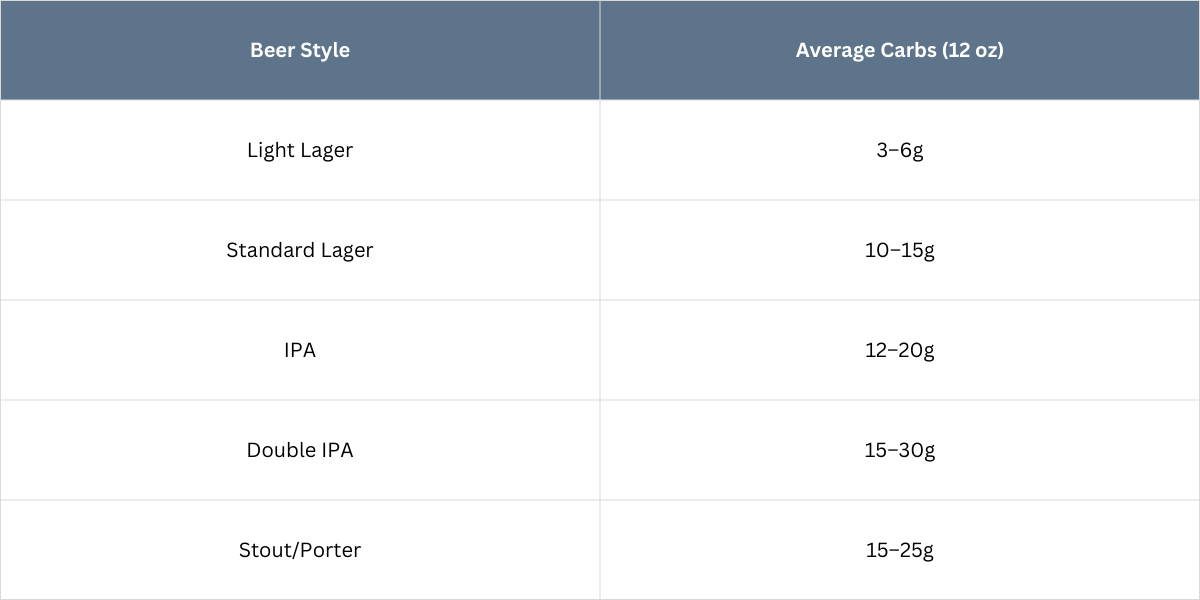
IPAs can vary because several factors affect the final carb content — including alcohol content, grain bill, and fermentation profile. Some finish dry, while others retain more residual sugars.
Lighter beers tend to be lower in carbohydrate content because they’re brewed to ferment more completely, leaving fewer remaining sugars per drink.
And while higher ABV often suggests more malt, and sometimes more calories, higher alcohol does not automatically mean higher carb intake. The brewing approach, yeast strain, and recipe design all influence how much sugar remains in your pint.
If you’re comparing beer to red wine, vodka, whiskey, rum, gin, or a mixed cocktail, remember that beer contains carbohydrates from grains, while pure alcohol itself does not contain carbs.
Do Higher ABV Beers Have More Carbs?
Sometimes, but not always.
Higher ABV beers are often brewed with more malt, which can mean more available sugars at the start of fermentation. If some of those sugars remain unfermented, the carbohydrate content and calorie content can be higher per drink.
However, yeast choice and fermentation technique matter. High-attenuation yeast strains are designed to convert more sugar into alcohol, which can lower the remaining carb count even in beers with elevated alcohol content. In that case, you may see higher alcohol but moderate carbohydrate intake.
Several factors affect the final numbers: grain bill, mash temperature, yeast performance, and recipe balance. Alcohol itself (pure alcohol) does not contain carbohydrates — the carbs come from residual sugars left behind after fermentation.
So, while ABV can influence how many calories are in one drink, it’s not the only sign of carb content. Brewing decisions play a key role in how much sugar remains in your glass.
Are There Low-Carb Craft Beers?
Yes, there are lower-carb options within craft beer, but the numbers vary depending on style and brewing choices.
Light lagers are typically the lowest in carbohydrate content because they are brewed to ferment more completely, leaving fewer residual sugars behind. Session beers can also fall on the lower end, especially when designed for a lighter body and moderate alcohol content.
Dry-hopped lagers may feel bold in aroma due to hops, but hop character does not automatically increase sugar content. What matters more is final gravity; beers with a lower final gravity generally contain fewer remaining sugars.
As with all alcoholic beverages, carb content varies depending on recipe, yeast performance, and other ingredients used in the brewing process. If you’re mindful of blood sugar, carbohydrate intake, or following a balanced diet, style selection plays a key role.
How to Estimate Carbs in a Beer (Without a Nutrition Label)
Not every beer lists carbohydrate content, but you can make an informed estimate by paying attention to a few key elements.
Check the ABV. Higher alcohol content sometimes means more malt was used, which can influence how much residual sugar remains. It’s not a perfect rule, but it’s a starting point.
Consider sweetness. If a beer tastes noticeably sweet — think honeyed, malty, or rich — it may contain more unfermented sugars.
Pay attention to mouthfeel. A heavier, fuller body often suggests more residual sugars and, in many cases, a higher carb presence. A crisp, dry finish usually indicates fewer remaining sugars.
No single factor tells the whole story. Different styles, brewing choices, and ingredients all affect the final numbers. If you’re mindful of nutrition, blood sugar, or simply aiming for balance, understanding these signs helps you choose a beer that fits your preferences and lifestyle.
Does Carb Count Really Matter?
For some people, yes. If you’re monitoring blood sugar, tracking nutrition, or following a specific diet, carbohydrate intake can be a key element of your overall plan.
For others, moderation matters more than the exact number. One beer enjoyed with good food, shared after a long hike or a day outside, fits comfortably into a balanced lifestyle.
Beer isn’t just numbers on a label. It’s crafted from grains, hops, yeast, and water and meant to be enjoyed, not overanalyzed. Whether you’re choosing lighter styles for trail days or something bolder for taproom nights, the goal is balance.
Adventure and enjoyment can coexist. Understanding what’s in your glass helps you make informed choices and then get back to what matters: good company, fresh air, and the next trail ahead.
Find Your Balance with New Trail
At New Trail Brewing Co., we believe great beer belongs wherever the trail leads — whether that’s deep in the woods or right here at the taproom. We brew a range of thoughtfully crafted lagers and ales designed for different tastes, different days, and different adventures.
Curious which style fits your pace? Use our Beer Finder to locate a New Trail beer near you. Planning a visit? Stop by our Tasting Room to explore what’s on draft and talk beer with our crew. From crisp lagers to hop-forward ales, there’s always something fresh waiting at the end of the trail.
Wherever you’re headed next, bring the right beer with you.
Conclusion
Carbohydrates in beer are simply what remains after the brewing and fermentation process runs its course. Different styles land in different ranges, and those numbers reflect real brewing decisions, not marketing labels.
If you’re paying attention to carb intake, understanding style differences gives you more control. If you’re more focused on experience, flavor, and occasion, the bigger picture often matters more than a single metric.
Beer is part science, part craft, and part community. Knowing what’s in your glass helps you choose intentionally.
Frequently Asked Questions
How many carbs are in a beer?
Most regular beer contains between 10 and 15 grams of carbohydrates per 12-ounce serving. Light beers may have as few as 3–6 grams, while higher-ABV styles like IPAs or stouts can contain 15–25 grams or more, depending on recipe and fermentation.
How much sugar is in beer?
Beer contains very little simple sugar by the time it’s finished. During the brewing process, yeast converts most sugars into alcohol. The remaining carbohydrates are primarily residual sugars that were not fully fermented.
How many calories are in a beer?
The calorie content of beer varies by style and alcohol content. On average, a 12-ounce serving ranges from 95–220 calories, with higher-ABV and malt-forward beers typically containing more.
How does the brewing process affect carb content?
The brewing process determines how much sugar is converted into alcohol and how much remains. Grain selection, mash temperature, yeast strain, and fermentation time all influence the final carbohydrate content in your glass.
Recent Posts
-
 How Beer Trends Influence Williamsport Breweries
 -
 How a Williamsport Brewery Creates Consistent Flavor Profiles
 -
 What Makes Small-Batch Brewing Special at a Williamsport Brewery?
 -
 Common Beer Myths Debunked by a Williamsport Brewery
 -
 The Difference Between a Brewery, Brewpub, and Taproom in Williamsport

