What Is Beer Made In? From Mash Tun to Your Serving Glass

New Trail has spent years mastering the craft of transforming simple ingredients into bold, trail-ready beers you trust. So when you ask, “what is beer made in?” we can answer.
You’re tapping into a world of mash tuns, lauter tuns, kettles, fermenters, and more, with each vessel playing its part in turning grain, hops, yeast, and water into that perfect pour.
In this guide, we’ll explore the essential equipment brewers use, from the first mash to the glass you hold.
Key Takeaways
- Beer is made in a sequence of specialized vessels, like the mash tun, kettle, fermenter, conditioning tank, and canning line. Each shapes sweetness, bitterness, and aroma.
- Mashing and lautering unlock fermentable sugars, boiling with hops adds flavor layers, and beer yeast converts those sugars into alcohol and carbonation.
- Final steps in bright tanks, precision canning, and proper glassware ensure clarity, freshness, and the intended flavor profile in every pour.
Brewhouse Basics: The Flow of Flavor
When you’re mapping out “what is beer made in,” think of the brewing process as a series of flavor checkpoints with each vessel tuning the taste of your pint:
Mash tun: Here, crushed malted barley meets hot water to kick off the malting process. This is where starches convert into fermentable sugars, setting the stage for your beer’s malt flavor and body.
Lauter tun: The grain bed doubles as a natural filter, separating sweet wort from spent grains. This wort carries all those sugars and pale malts forward into the boil.
Brew kettle: Here’s where wort boiling transforms sugars into a sterilized base. Brewers add hops in stages to dial in hop bitterness, alpha acids, and hop character, whether you’re aiming for a crisp pale ale or a full-bodied lambic style.
Whirlpool: Spinning the hot wort gathers hop solids and proteins into a neat cone, clarifying the liquid before chilling.
Fermenter: Wort cools, and yeast strains jump into the fermentation process. Primary fermentation produces alcohol and carbon dioxide, and some brewers follow up with secondary fermentation for extra clarity or specialized styles.
Conditioning tank: Cold-conditioning and natural carbonation finish off your brew, refining flavor and aroma while yeast cleans up any off-notes.
Canning line to glass: finally, whether sealed in cans or a beer bottle, the final product holds onto every nuance. From the first grain to the last pour, each tank and tun shapes the adventure in your glass.
Mashing & Lautering
This stage transforms malted grains into the sweet wort that kickstarts fermentation. Here’s what happens:
- Mixing malted grains and water: Brewers combine crushed malted grains with hot water so enzymes naturally break down starches into fermentable sugars. This wort is the foundation of every craft beer, from pale ale to lambic beer.
- Separating liquid from spent grains: In the lauter tun, the grain bed acts like a filter, letting the sweet wort flow through while holding back the husks. The result is a clear liquid rich in sugars and malt flavor.
- Wort collection and transfer: That sugary wort moves on to the brew kettle, leaving behind spent grains, often repurposed by local farms. This clean transfer keeps unwanted solids out of the boil.
Impact on final taste
How thoroughly sugars are extracted shapes the body and sweetness of the beer, whether you’re enjoying a low alcohol beer, a crisp pale lager, or a full-bodied mild ale.
Craft brewery variations
Modern breweries adapt this basic step to regional beer styles using specialty malts for color, roasted barley for a toasty edge, or other grains like wheat and oats to tweak mouthfeel.
With mashing and lautering, brewers set the stage for fermentation by turning raw materials into the rich, fermentable material that yeast strains will later transform into ethyl alcohol and carbon dioxide.
Boiling & Hops
Once wort is drawn off the grains, it enters the brew kettle for a vigorous boil, which is an essential step in beer production that sterilizes the liquid, drives off unwanted volatiles, and concentrates your malt flavors. Here’s how hops join the party:
- Sterilization and flavor development: Boiling cleans up the wort so pure yeast cultures—typically Saccharomyces cerevisiae (the yeast species brewers use to ferment sugars into alcohol and CO₂)—can flourish during fermentation. This hot phase also deepens malt character and sets the stage for balanced bitterness versus sweetness in every pint.
- Hop additions over time: Brewers add hops in stages to layer bitterness, flavor, and aroma. Early additions contribute firm bitterness (measured in international bittering units); middle additions bring hop variety and taste; and late or post-boil “flavor” hops deliver those fresh, floral, or citrus top notes beloved by craft beer drinkers.
- Whirlpool separation: After flameout, the wort is gently swirled in a whirlpool vessel. This spinning motion gathers hop and protein solids into a tight cone, making it easier to transfer only the clear wort for cooling, so your final beer consists of all the good stuff and none of the grit.
Impact on final taste
How you boil and hop defines the backbone of styles from pale ale’s bright zest to lager beers’ delicate crispness. Combined with water’s mineral content and the yeast strains you select, these choices shape alcohol content, mouthfeel, and aroma in the glass.
In modern breweries, this boil-and-hop choreography is a key chapter in creating beer. It transforms basic ingredients into a flavorful canvas for the yeast to work its magic during fermentation.
Fermentation
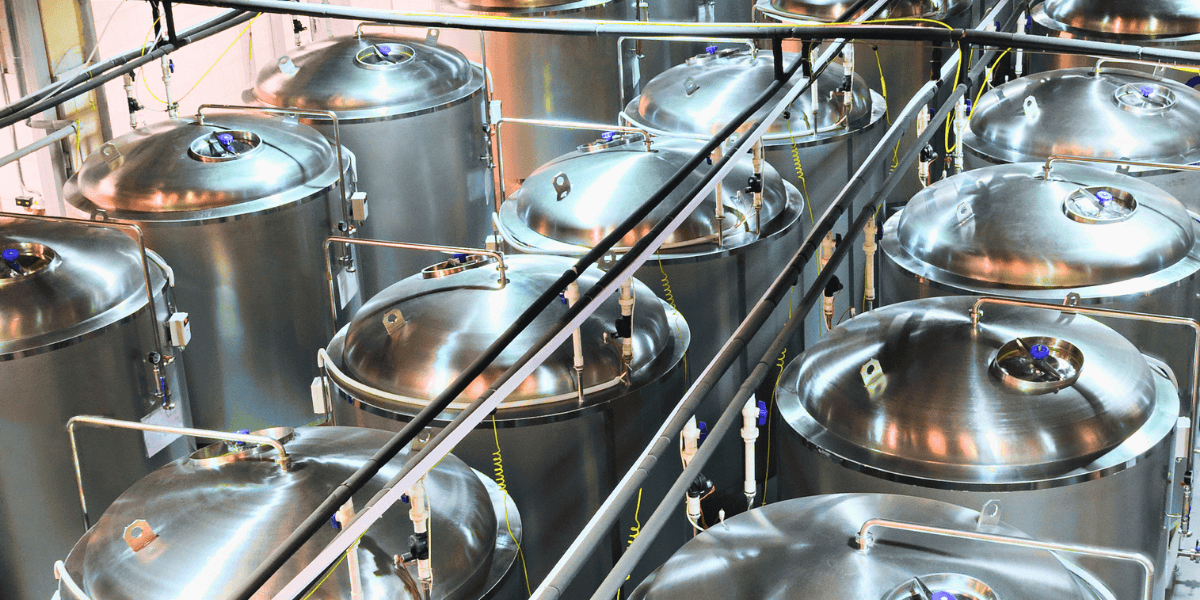
After cooling the wort, it moves into the fermentation vessel. Yeast (the fourth of beer’s main ingredients alongside water, malted grains, and hops) transforms sugars into ethyl alcohol and carbon dioxide, defining your beer’s character.
Conical/cylindroconical tanks
Most modern breweries favor these closed, stainless-steel vessels. Their sloped bottoms trap CO₂ and allow spent yeast to settle, making it easy to harvest proprietary yeasts for future batches.
Keeping the environment sealed also helps control pressure, carbonation levels, and cleanliness, which are key for consistent pilsners, pale ales, and hop-forward brews.
Open vs. closed fermenters
- Open fermenters: Traditional ales (and lambic beer) often start in open-top vessels. Exposure to air and wild yeast strains can impart unique fruity or funky notes, but at the cost of higher contamination risk.
- Closed fermenters: Preferred for lager beers and more delicate styles, closed tanks maintain precise temperatures. This tight control ensures clean fermentation, predictable flavor, and fewer off-notes.
Impact on final taste
The choice of vessel, yeast strain (Saccharomyces cerevisiae for ales, S. pastorianus for lagers), and fermentation profile directly influences your beer’s body, aroma, and mouthfeel. Whether you favor a crisp pale lager or a hearty mild ale, this stage locks in the balance of hops and yeast that defines each style.
Fermentation is where craft beer truly comes to life by converting that cooled wort into the beverage we know and love, with each yeast strain and tank choice adding its own signature twist.
Conditioning & Maturation
Once primary fermentation ends, beer moves into bright tanks to refine its clarity, texture, and carbonation before hitting your glass. Here’s how brewers polish each batch:
- Fining & filtration: In bright tanks, gentle fining agents or filters help remove leftover yeast and protein haze for a crisp appearance. This step brings out the pure color and shine that beer drinkers expect.
- Carbonation control: Brewers adjust carbon dioxide levels, either naturally through yeast activity or by injecting CO₂, to achieve the ideal bubble. The right carbonation lifts hop aroma and balances mouthfeel, whether you’re pouring a soft wheat beer or a bright pale lager.
- Cold conditioning: Slow, cool maturation lets residual yeast settle and unwanted flavors mellow. Lower temperatures (common in the brewing industry for lagers) create a smoother finish and sharpen hop character in ales and darker regional beer styles alike.
Final taste tuning
During this maturation, subtle interactions between water, hops, and yeast refine the flavor and aroma. The result is a beer that “is made” to showcase its intended profile: clean and refreshing or rich and complex and ready for canning.
This final stage of beer production ties together all the raw materials and processes and transforms your pint into the polished, adventure-ready brew you love.
Canning Line
After conditioning, beer moves from bright tanks to the canning line, where packaging becomes the last chapter in “how beer is made”:
- CO₂ purge before fill: Before each can is filled, the line is flushed with carbon dioxide to remove oxygen. This purge prevents oxidation, ensuring that hop character and the delicate esters from different yeast strains stay true to the brewer’s intent.
- Precision seamers: Modern double-seam canners crimp lids onto aluminum bodies with an airtight seal. By locking out both oxygen and light, cans preserve hop bitterness and aroma without risk of skunk, even if your brew spends weeks in a cooler.
From the main ingredients to your pack
Every nuance—from the minerality of soft water to the flavor contributions of pure yeast cultures—survives the canning process. That means the final taste you enjoy reflects the care taken at every brewing step.
From Can to Glass: Presentation Matters
The final step in your beer journey isn’t just about “what is beer made in,” but how you showcase it. The right glassware turns a simple pour into a sensory adventure:
- Glass shape & aroma: Choose an IPA glass to concentrate hop aromas and highlight the citrus or pine character you got from hop variety additions. A weizen or flute glass lifts yeast-driven esters—perfect for wheat beers—while a classic nonic pint glass offers versatility for most ales and lagers.
- Head retention & mouthfeel: Look for a glass with a slight inward taper or nucleated base to encourage steady carbonation release and a stable 1–1.5-inch foam head. That foam traps volatile compounds from your main ingredients (water, malt, hops, yeast) so each sip bursts with flavor and aroma.
Pouring tips for the perfect pint
- Tilt and start: Hold your glass at a 45° angle and pour mid-stream to build a smooth head without over-agitating the carbonation.
- Straighten and finish: When the glass is half-full, tilt it upright and pour into the center to top off the head to around one finger’s width. This follows Brewers Association recommendations for optimal foam.
- Let it settle: Give your beer a few seconds after pouring. That pause lets CO₂ settle, yeast sediment drop slightly, and hop aromas rise so the first sip is as vibrant as the last.
With the right glass and pour, you’ll highlight the nuances of your can-sealed brew. It’s proof that every detail, from beer brewing to beer yeast selection to canning line precision, matters in delivering your perfect pint.
Gear Up for Your Next Sip
When you’re ready to experience the journey from grain to glass, here’s how to get started:
Visit our Tasting Room
Join us at New Trail’s Tasting Room to sample our full lineup, ask about yeast strains and hop varieties, and see the precision that goes into every can-sealed pour.
Find New Trail beer near you
Use our Beer Finder to locate local merchants stocking our beers. Then pop open that can, pour into your favorite glass, and taste the adventure.
Conclusion
Whether you’re a homebrew hobbyist or a curious beer drinker, knowing about beer brewing and where and how it happens brings a new appreciation for every can and every sip. From the mash tun that teases out sweetness to the fermenter where yeast works its magic, each vessel plays a role in crafting the bold flavors you crave.
Next time you crack open a New Trail IPA—or any favorite—take a moment to toast the journey from raw ingredients to your glass. Here’s to knowing the how, so you can better enjoy the wow.
Frequently Asked Questions
What vessels are involved in the brewing process?
Beer is made in a sequence of specialized tanks, from the mash tun and lauter tun that extract fermentable sugars, to the brew kettle and whirlpool where hops impart bitterness and aroma, and finally to fermenters and bright tanks that mature and carbonate your pint.
How does malted barley impact flavor in craft beer?
Malted barley provides the sugars that yeast ferments into alcohol and CO₂, and its roast level—from pale malts to darker crystal or roasted barley—lays the foundation for everything from the toasty notes in a mild ale to the rich color of a stout.
What role does beer yeast play in creating beer?
Pure yeast cultures (like ale yeast or lager yeast) convert sugars in the wort into ethyl alcohol and carbon dioxide during fermentation, while also producing flavor compounds that shape a beer’s aroma, profile, and mouthfeel.
What are the main ingredients in beer?
Beer consists of four basic ingredients: water (influencing mouthfeel and minerality), malted grains (for sugar and body), hops (for bitterness and aroma), and yeast (for fermentation), all coming together in the vessels we’ve explored.
Recent Posts
-
 How Beer Trends Influence Williamsport Breweries
 -
 How a Williamsport Brewery Creates Consistent Flavor Profiles
 -
 What Makes Small-Batch Brewing Special at a Williamsport Brewery?
 -
 Common Beer Myths Debunked by a Williamsport Brewery
 -
 The Difference Between a Brewery, Brewpub, and Taproom in Williamsport

